· Paul · What's It Worth? · 6 min read
Aftermarket vs OEM Catalytic Converters: How to Tell and What Each Is Worth
An aftermarket converter looks like the real thing and is worth a fraction of it. Here’s how to tell a replacement from a factory converter in under a minute, and what each typically brings as scrap.
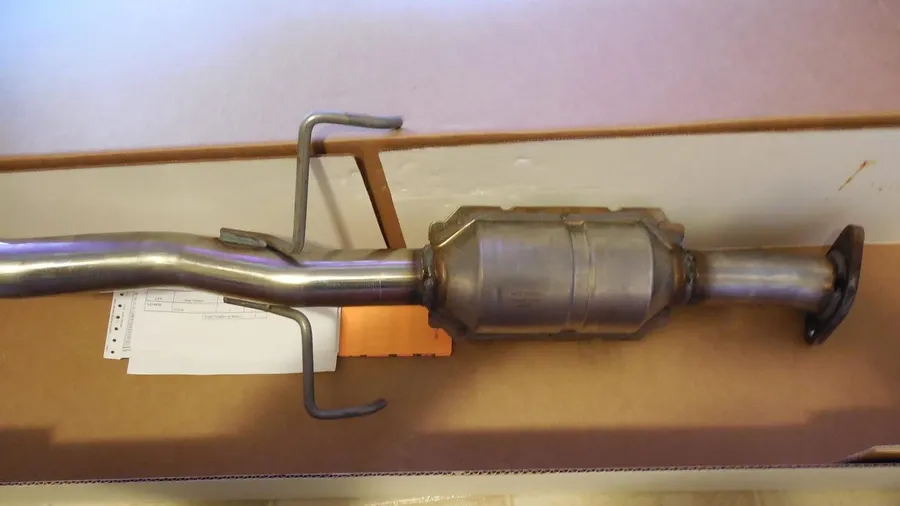
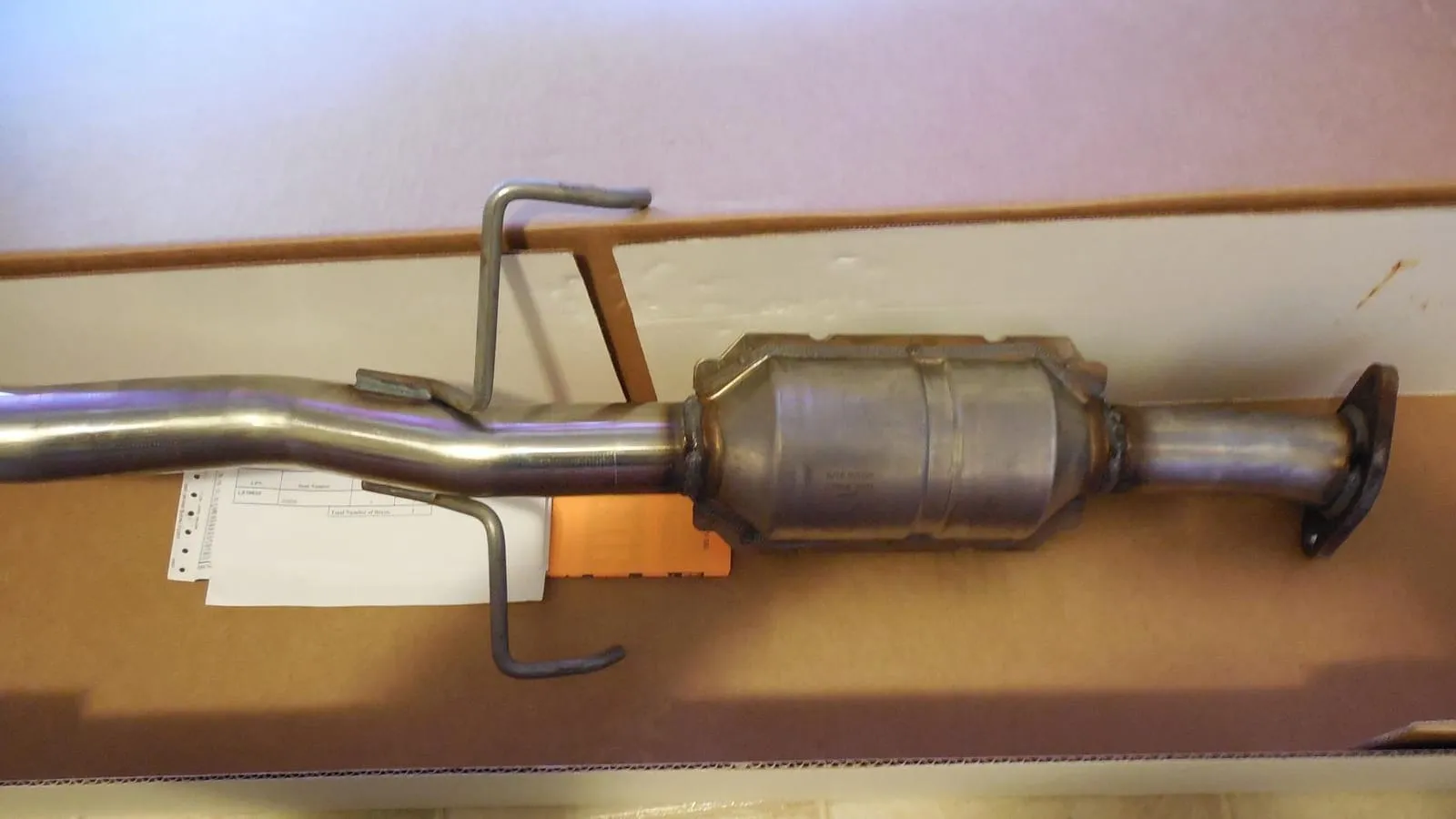
When a car’s original converter fails or gets stolen, it usually gets replaced with an aftermarket unit: a new converter from a parts maker such as MagnaFlow, Walker, or Eastern, built to pass emissions for a fraction of the dealer price. The savings come from the same place the scrap value lives, the precious-metal coating inside. So the first question about any converter you’re about to sell is whether it’s the factory original.
Quick answer (US buyer ranges, July 2026): an aftermarket converter typically brings $8–$60 as scrap. A factory (OEM) converter brings about $50–$220 from a standard domestic car, $70–$280 from an import, and $80–$420 from a large SUV or truck. The fastest tell is the stamp: aftermarket units carry a maker code, a part number, and a month-and-year date, while factory units carry the carmaker’s logo and part number.
Why aftermarket converters are worth so little
A converter’s scrap value is the platinum, palladium, and rhodium coated onto its ceramic honeycomb. A factory converter has to keep a new car within its emissions limits for the life of the car’s emissions warranty and beyond, so carmakers load it generously. An aftermarket replacement only has to meet the shorter durability requirements set for replacement parts, and it competes on price, so makers use as little precious metal as they can. Converter buyers commonly put an aftermarket unit at around a tenth to a fifth of the metal in the factory part it replaced.
How to tell them apart
| Check | Factory (OEM) | Aftermarket |
|---|---|---|
| The stamp | Carmaker’s logo and part number (GM numbers, Ford’s three blocks, BMW roundel) | Maker’s name or two-letter code, part number, and a month-year date; a “D-” number on California units |
| The shape | Shaped to fit the car, often with formed heat shields, sometimes built into the manifold | A generic round or oval can, often a “universal” fit, with a simple heat shield or none |
| The joints | Factory flanges and joints | Weld seams or clamps where it was cut into the pipe |
| The age | Weathered like the rest of the exhaust | Often visibly newer than the pipes around it |
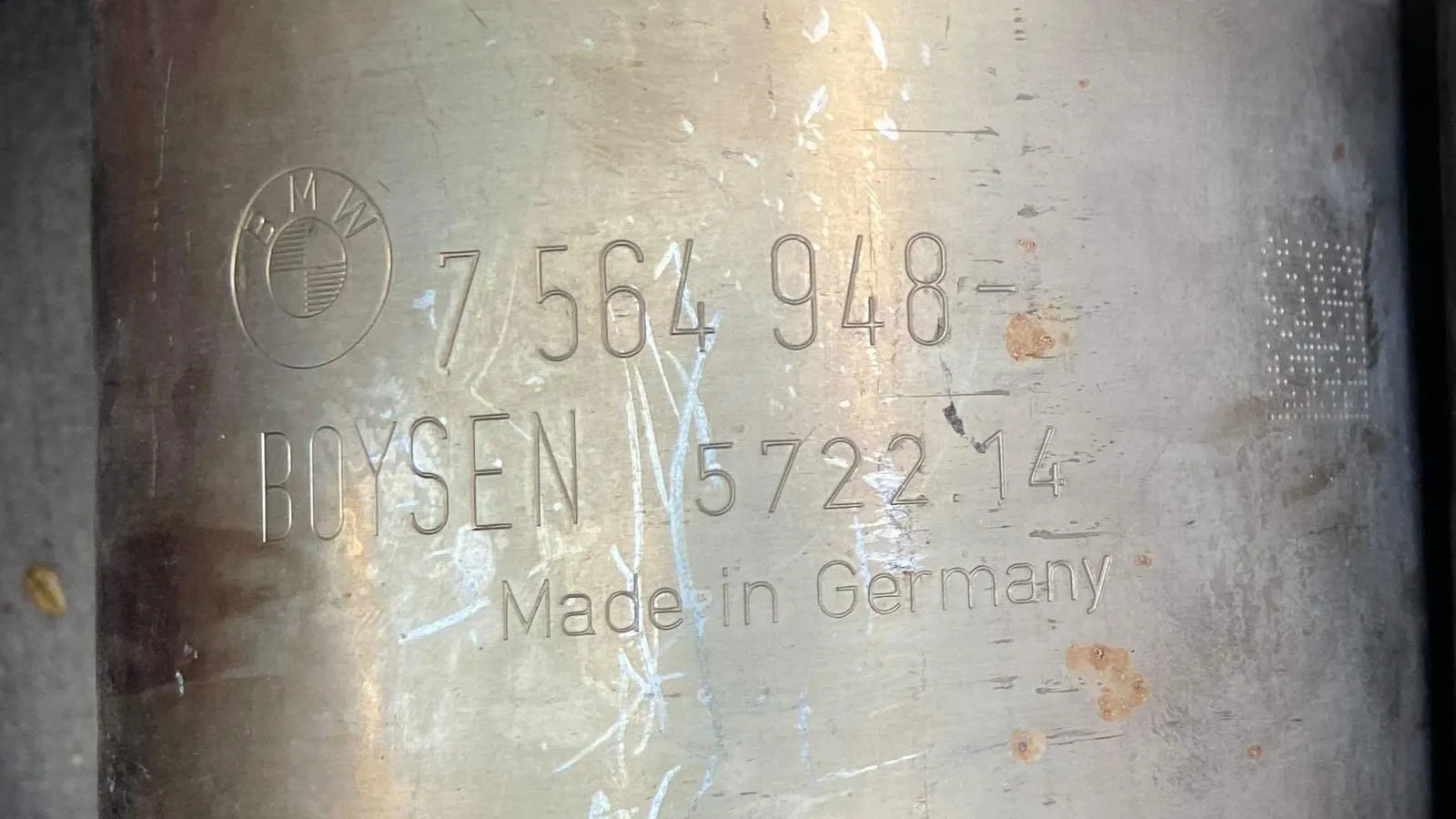
The stamp settles it most of the time. Here’s what a factory one looks like:
Decoding an aftermarket stamp
California’s Air Resources Board (CARB) publishes the labeling rules, and they make aftermarket converters easy to spot. Converters approved for California before 2009 carry a line like this:
N/CA/TA 200300 09 05 OBDII
- N: a new aftermarket converter (U marks a certified used one). CARB notes the first letter is sometimes left off.
- CA: approved for use in California.
- TA: the maker. CARB’s list includes CE (MagnaFlow), TA (Walker), EM (Eastern Manufacturing), BO (Bosal), and AT (Catco).
- 200300: the maker’s part or series number.
- 09 05: the month and year it was made, here September 2005.
- OBDII: approved for specific OBD II vehicles.
Units approved since 2009 carry a CARB Executive Order number starting with D- (written D-XXX-XX), then the part number, then a month-and-year date. Outside California, aftermarket converters usually still show the maker’s name or code, a part number, and a date. A factory converter shows the carmaker’s logo and part number instead. A maker code from CARB’s list or a D- number on the shell means aftermarket. (Source: CARB, Understanding Catalytic Converter Labeling.)
What it means when you sell
- Aftermarket converters still sell, for small money. Many buyers pay a flat price per unit or by weight. It’s worth taking if the car is going to scrap anyway; it’s rarely worth a special trip.
- Factor it in when you buy a junk car. A car whose converter was replaced isn’t carrying the factory unit you may be counting on. Look underneath before you agree a price, and run the numbers in the Scrap Lot Deal Analyzer.
- Empty shells pay as steel. A gutted converter or a straight test pipe has no catalyst. Look through it: you should see the honeycomb, not daylight.
- Don’t cut it open to check. Buyers price converters whole. If you can’t tell what you have, send photos of the stamp and the whole unit to a converter buyer.
If you’re taking a converter off your own junk car, cut the pipe on either side, not the converter body:
Reciprocating saw + metal-cutting blades
$$$How most converters come off a junk car: cut the exhaust pipe on each side of the converter. A cordless saw means no cord to drag under the car. Budget a fresh blade or two per converter; exhaust pipe dulls them fast.
Look for: Bi-metal blades made for metal, 6–8". Let the exhaust cool completely, and cut the pipe, not the converter body: buyers price it whole, and an opened shell gets lowballed.
Pick: Milwaukee M18 FUEL Hackzall (bare tool)
For a ballpark on either kind, pick the type in the Catalytic Converter Value Estimator: “Aftermarket / universal / small” covers replacements, and the domestic, import, and truck types cover factory units. To get an exact number for a factory converter, you’ll need its code: here’s how to read a catalytic converter serial number.
Selling it legally
Sell only converters from a vehicle you own. Catalytic-converter theft is a felony in most states, and buyers increasingly require photo ID, proof of ownership, and a record of the transaction. If you can’t show where it came from, a legitimate buyer won’t touch it. That applies to aftermarket converters exactly as it does to factory ones.
Aftermarket converter questions
How much is an aftermarket catalytic converter worth?
Typically $8 to $60 as scrap at US buyer prices (July 2026 ranges), against $50–$220 for a standard domestic factory converter. Aftermarket units carry far less platinum, palladium, and rhodium, which is how they sell new for a fraction of the factory price.
Can I tell OEM from aftermarket without a code?
Usually. Look for the carmaker’s logo on the shell, a body shaped to fit the car rather than a generic round or oval can, and the absence of weld seams or clamps where it joins the pipe. A converter that looks much newer than the exhaust around it is almost always a replacement. When you can’t tell, a converter buyer can from clear photos.
Is an aftermarket converter worth removing from a junk car?
Only if the car is going to scrap anyway and the converter comes off easily. At aftermarket prices, an hour under the car and a saw blade or two can eat most of the money, and some junk-car buyers pay less for a car with the converter missing.
Should I cut a converter open to check what’s inside?
No. Buyers price converters whole, by the stamp and the shape. An opened shell gets lowballed or refused, and loose ceramic dust is a mess to handle. If you’re unsure what you have, send photos to a buyer instead.
What about converters with nothing inside?
A gutted shell or a straight “test pipe” has no catalyst, so it pays like any other steel exhaust part: pennies a pound. Shake it and look through it: you should see the honeycomb, not daylight.
Keep learning
- How to read a catalytic converter serial number and turn it into a real quote.
- Catalytic Converter Value Estimator: ballpark ranges by converter type and metal market.
- Scrapping the rest of the car? The Electric Motor Value calculator prices the alternator, starter, and blower motors.
- converters