· Paul · Wire & Cable · 3 min read
Copper Recovery Rates by Cable Type: The Master Table
How much copper is actually inside each kind of cable — a sourced, conservative table you can trust, plus a calculator to run your own weights and prices against it.
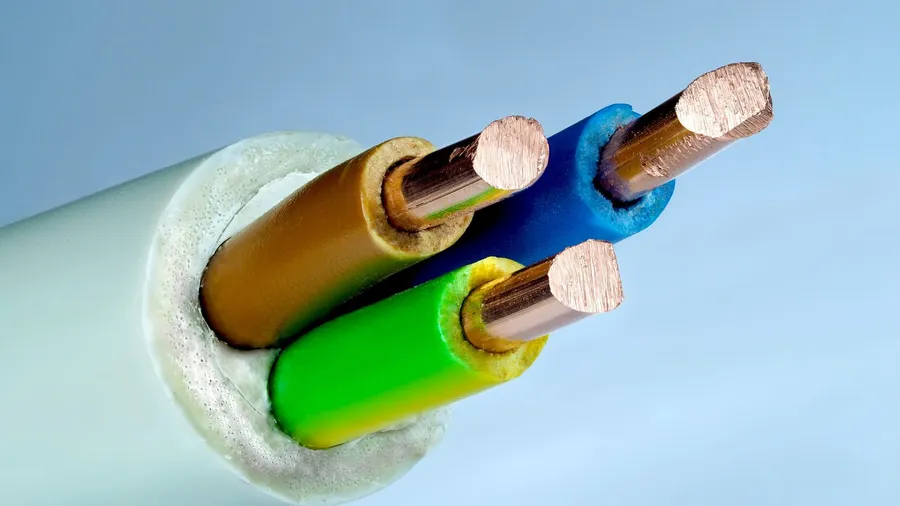
Copper recovery rate is the single most useful number in the wire business: the percentage of a cable’s total weight that turns into bare copper once the insulation is gone. Get it right and you can price any bucket of wire in your head. Get it wrong and you either leave money on the table or overpay for a lot that’s mostly plastic.
This is our master table. Every figure below has been checked against at least two published sources — scrap yard grading guides (Sahd Metal Recycling, Rockaway Recycling), wire-stripper vendors (StripMeister), and the iScrap App database — and the defaults are set at the conservative end of each range, so the surprises at the scale land in your favor.
The table
| Cable type | Recovery | Typical range | Notes |
|---|---|---|---|
| MCM / feeder cable (250 MCM+) | ~88% | 85–94% | Thick utility/feeder cable. Highest recovery of any common cable — almost always worth stripping. |
| THHN — heavy gauge (4 AWG to 4/0) | ~84% | 80–90% | Commercial power wire, thin nylon jacket over thick conductor. The scrapper's favorite. |
| THHN — standard (8–16 AWG) | ~80% | 75–88% | Most common commercial wire. Solid recovery, easy machine stripping. |
| Double-insulated power wire | ~75% | 70–80% | Two insulation layers — strip both or yards grade it down. |
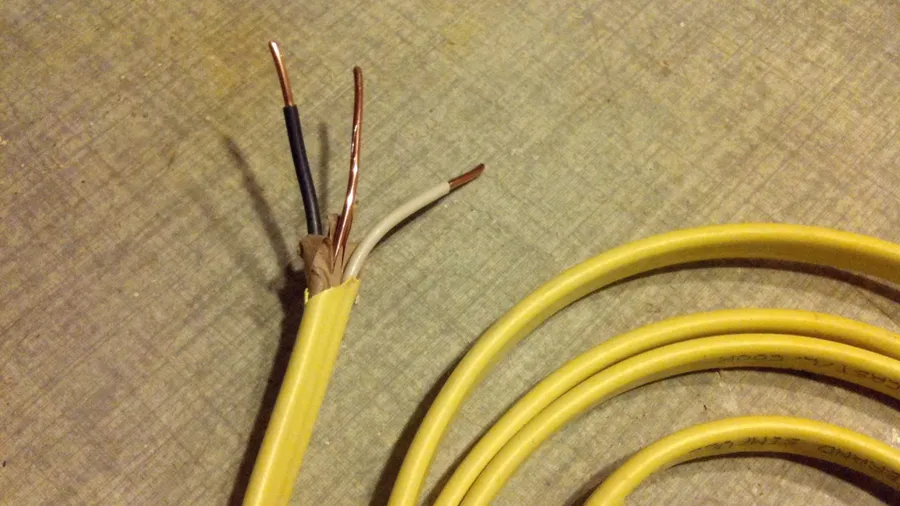
| Romex / NM-B (indoor solid) | ~65% | 60–73% | White/yellow/orange flat household cable, multiple solid conductors in a jacket. Old cloth-jacketed romex with tinned conductors runs closer to 48%. |
| Mixed #2 insulated wire | ~60% | 55–69% | Catch-all grade for mixed household/appliance wire. |
| AC / appliance whip wire | ~55% | 50–60% | Stranded conductors with thicker rubber insulation. |
| Extension cords / SJ cord | ~42% | 35–48% | Stranded fine copper under rubber. Cut off and sell the plugs' brass separately at some yards. |
| Cat5/Cat6 — solid bulk runs | ~42% | 35–58% | Eight thin solid conductors. Recovery is better than folklore says, but stripping 24 AWG by hand is brutally slow — nearly everyone sells data cable unstripped. Stranded patch cords recover roughly half of solid runs. |
| Cat5/Cat6 patch cords (stranded) | ~22% | 18–28% | Stranded cores recover about half of solid-core cable. Sell as-is. |
| MC/BX armored cable (copper inside) | ~30% | 25–35% | The armor dominates the weight. Estimate only — recovery varies with armor type; weigh armor separately if you break it down. Aluminum-armor MC pays extra for the armor. |
| Christmas lights | ~20% | 15–25% | Published figures range 5–30% — hair-thin conductors, sockets, and bulbs eat the weight. Never worth stripping; sell by the pound as-is. |
A word on how to read it: the default is a safe planning number, the range is what you’ll actually see depending on gauge, age, and condition. A tin-coated cloth romex from a 1960s house recovers far less than a clean modern NM-B, even though both are “romex.” When it matters, measure — instructions below.
Run your own numbers
The table tells you the percentage; this calculator turns it into dollars. Pick your cable type, enter the weight and your local yard’s prices, and it shows what the copper is worth stripped versus selling the cable as-is:
Typical range 85–94%. Thick utility/feeder cable. Highest recovery of any common cable — almost always worth stripping.
Indicative October 2026 default — enter your yard's price. Saved for next time.
Indicative October 2026 default — enter your yard's price. Saved for next time.
Why the numbers vary so much
Two cables can look identical and grade completely differently. Three things drive recovery rate:
- Conductor-to-insulation ratio. Thick power wire like THHN is mostly copper with a thin nylon skin, so it recovers 75–90%. Communications cable packs eight hair-thin conductors into heavy jacketing, so it recovers far less by weight.
- Solid vs stranded. Stranded conductors (extension cords, patch cables) have more surface area and thinner strands, and they recover roughly half of what an equivalent solid-core run does.
- Coatings and fillers. Tinned copper, steel armor (MC/BX), sockets and bulbs (Christmas lights) all add non-copper weight that drags the rate down.
Measure your own recovery rate in ten minutes
Any table is an average. Yours will be specific. Here’s the method every yard uses to set its ICW grades:
- Cut a sample — 1 lb of cable is plenty — and weigh it.
- Strip it completely down to bare copper.
- Weigh the copper.
- Divide copper weight by the original weight, multiply by 100.
That percentage is your real recovery rate for that exact cable. Punch it into the “Custom recovery %” option in the calculator above, and do it once for each cable type you handle regularly. A kitchen scale and ten minutes beats any number on the internet — including ours.
Digital precision pocket scale (0.01 g)
$Gold and silver are priced by the gram — you cannot sell them intelligently without weighing them yourself first. A $20 scale routinely changes a jewelry offer by hundreds of dollars because you walk in knowing the melt number.
Look for: 0.01 g resolution, 200–500 g capacity, includes calibration weight. Skip anything without a cal weight.
Pick: Weigh Gram digital pocket scale
Keep going
- Deep dives on the most common cables: Romex · THHN · Cat5/Cat6 · extension cords · Christmas lights — each with a worked dollar example, grade, sources, and a strip-or-sell verdict.
- The full Copper Wire Identification Guide — how to recognize each cable type by sight before you ever weigh it.
- #1 vs #2 Copper: How Yards Grade It — what your stripped copper is actually worth once it’s clean.
- The Copper Wire Yield Calculator on its own page, with a by-length mode for spools and offcuts.
- Back to all Wire & Cable guides.
- copper
- wire
- e-waste