· Paul · Selling & Yards · 8 min read
How to Read a Catalytic Converter Serial Number (and Get a Real Quote)
A converter's value is hiding in the number stamped on its shell. Here's where to find it, how to read a rusty or faded stamp, what the codes look like by brand, and how buyers turn that number into a price.
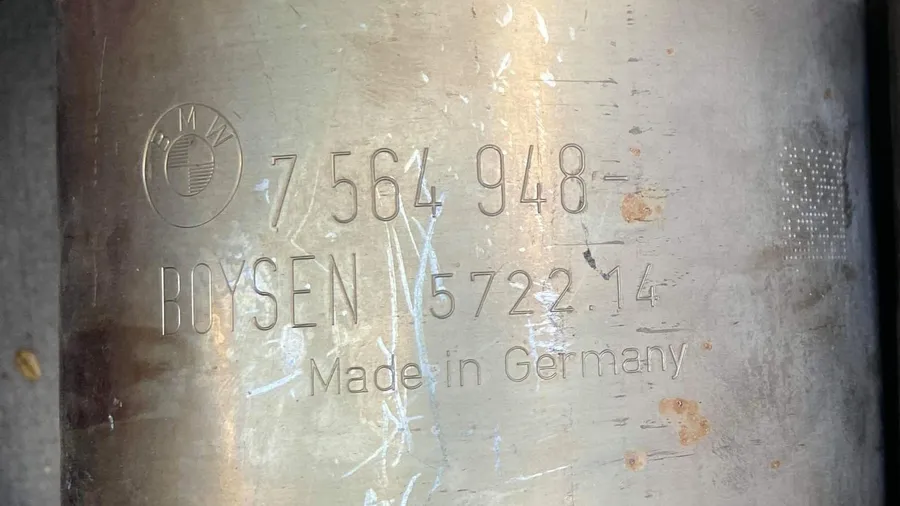
Two converters that look the same from the outside can differ in value by hundreds of dollars. The difference is how much platinum, palladium, and rhodium the maker coated onto the ceramic honeycomb inside, and you can’t see that. What you can see is the number stamped on the shell. Buyers use it to look up the measured metal content of that exact part, so finding and reading it is the most valuable five minutes in selling a converter.
Quick answer (US buyer ranges, July 2026): the code is stamped into the converter’s shell or heat shield, usually near one end. Clean it with a wire brush, read it with a flashlight held almost flat, and photograph it. It matters because a standard domestic converter alone can bring anywhere from $50 to $220, and the code is how a buyer tells where yours falls. Aftermarket replacements bring $8–$60, and their stamp gives that away too.
Where to find the number
- On the shell. Most factory converters have the code stamped into a flat area of the steel body, often toward the inlet or outlet end.
- On the heat shield. Some carry it on the outer shield instead, and some have a second code underneath it.
- On a plate. Aftermarket converters sometimes have a small stamped plate welded or riveted near one end.
- On every converter. Many vehicles have more than one: converters right behind the exhaust manifold and another further back under the floor. Each has its own code and its own value.
If the converter is still on the vehicle, you’re reading it from underneath, which means the car goes up on jack stands. A jack alone is not enough to work under a car.
Jack stands (pair)
$$Non-negotiable for any job under a car. A jack lifts the car; stands hold it. Never put any part of yourself under a car held up only by a jack.
Look for: A pair rated well above the vehicle (3-ton stands cover most cars and light trucks). Set them on flat, hard ground at the frame lift points.
Pick: Torin Big Red 3-ton jack stands (pair)
Reading a rusty or faded stamp
Exhaust parts live in road salt and heat, so most codes are hard to read at first. In order:
- Clean it gently. A wire brush and a rag clear rust scale and grime. Don’t grind, sand, or sandblast: the characters are only lightly stamped, and you can erase the one thing a buyer needs.
- Use raking light. Hold a flashlight almost flat against the shell and move it around. Stamped characters show up as shadows that you can’t see in straight-on light.
- Try chalk. Rub chalk or a crayon across the stamp, then wipe the flat surface with a finger. The color stays in the recesses and the characters pop out.
- Photograph it several ways. Shoot the stamp from a few angles, with and without flash, and zoom in afterward. A phone photo often shows characters your eyes missed.
Wire brush set
$Rust and road grime hide the stamped code on a converter, and the code is what a buyer prices it by. A stiff wire brush clears the stamp in a minute so you can read it and photograph it.
Look for: A small brass or stainless set with a toothbrush-size head reaches between heat shields. Brush only the stamped area; never grind or sand it, or you erase the code you are trying to read.
What the codes look like
The format depends on who made the converter. These are typical patterns, not rules. When in doubt, photograph everything stamped on the shell and let the buyer sort it out.
- GM (Chevrolet, GMC, Buick, Cadillac): mostly numbers. Buyers report that many GM codes start with sequences like 126, 127, 253, or 255.
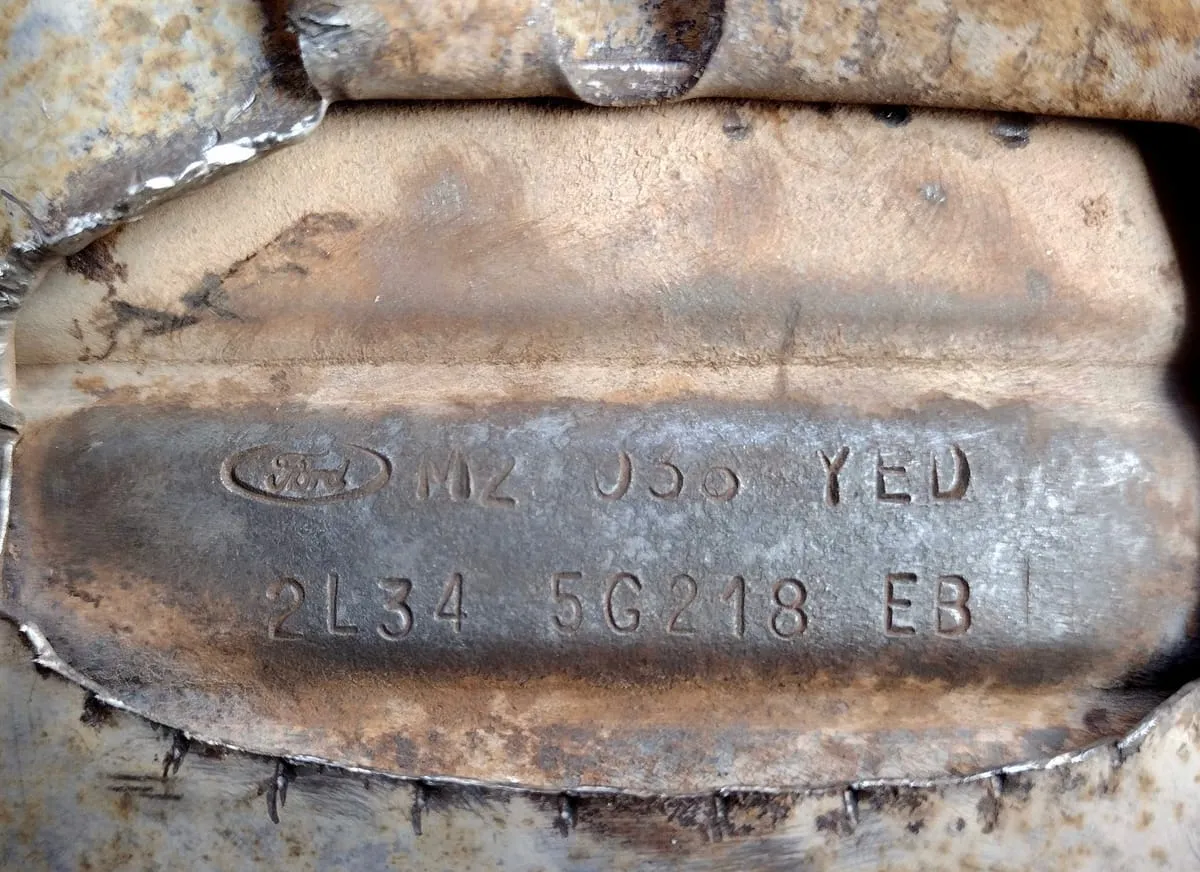
- Ford, Lincoln, Mercury: the Ford oval next to a Ford-style part number in three blocks, like the 2L34 5G218 EB in the photo below.
- Toyota and Lexus: a short code stamped on the shell, sometimes with the Toyota logo. Some vehicles use left and right converters with different codes, so note which side each came from.
- Honda and Acura: many have no clear stamp at all. Buyers identify them from photos of the shape, heat shields, and sensor ports, plus the vehicle.
- European makes: the carmaker’s logo and part number, often with the supplier’s name, like the BMW unit at the top of this page (part number 7 564 948, made by Boysen).
- Aftermarket replacements: a maker’s name or a two-letter maker code, a part number, and a month-and-year date. California-approved units add a CARB number that starts with D-. This stamp is the clearest sign a converter is aftermarket, which means it’s worth a fraction of a factory unit. Here’s how to tell aftermarket from factory converters in detail.
Turning the code into a price
A converter buyer runs the code against a database of assay results: how many grams of platinum, palladium, and rhodium that part was measured to contain. They multiply by the day’s metal prices and pay a share of the result. Two things follow from that:
- Quotes expire fast. Rhodium and palladium can move a lot in a week, so a quote is good for days, not months.
- Shopping around pays. Buyers pay different shares of the metal value, so the same code can get noticeably different offers.
To get a real number, send a clear photo of each stamp, a photo of the whole converter, and the vehicle’s year, make, model, and engine to two or three reputable converter buyers. Ask whether the quote is per converter and how long it’s good for. Sell it whole: cutting a converter open to sell the ceramic invites disputes over weight and lowball offers.
Before you call anyone, the Catalytic Converter Value Estimator gives you a ballpark by converter type, so you know whether an offer is in the right range.
Selling it legally
Sell only converters from a vehicle you own. Catalytic-converter theft is a felony in most states, and buyers increasingly require photo ID, proof of ownership, and a record of the transaction. If you can’t show where it came from, a legitimate buyer won’t touch it. The code helps here too: it ties the converter to a make and model, and a buyer will expect that to match your paperwork.
Converter serial number questions
Where is the serial number on a catalytic converter?
Stamped into the steel shell, usually on a flat area toward one end, or on the outer heat shield. Some converters carry a second code under the heat shield, and aftermarket units sometimes have it on a small plate welded near the inlet. Check every converter on the vehicle: each has its own code.
What if my converter has no serial number?
Many do not, especially Hondas and heavily rusted units. Buyers can still identify most converters from clear photos of the whole unit (its shape, heat shields, and sensor ports) plus the vehicle’s year, make, model, and engine. Expect a more cautious quote than for a converter with a readable code.
Can I look up a converter’s value myself?
Partly. Paid price databases and apps match codes to prices, and they’re built for dealers. For a one-off sale, sending photos to two or three converter buyers gets you real quotes for free. Prices follow platinum, palladium, and rhodium, so a quote is only good for a few days.
Why are two converters from the same car priced differently?
They carry different amounts of precious metal. A converter close to the engine and one further down the exhaust are different parts with different coatings, so each code gets its own price.
Do I need the serial number to sell a converter legally?
The code is for pricing; the legal side is about ownership. Buyers increasingly require photo ID and proof that the converter came off a vehicle you own, such as a title, registration, or junk-car paperwork, and they record the sale. Some states add their own rules on top.
Keep learning
- Aftermarket vs OEM catalytic converters: how to tell them apart and what each is worth.
- Catalytic Converter Value Estimator: a ballpark by converter type and metal market.
- Selling the rest of the car’s metal too? Start with your first trip to the scrap yard.
- converters
- selling