Copper content
How much copper is in Cat5e and Cat6 cable?
About 42% of the weight is recoverable copper. Here's how much copper each common size holds, and what that means for stripping and what your yard will pay.
Identifying Cat5e and Cat6 cable
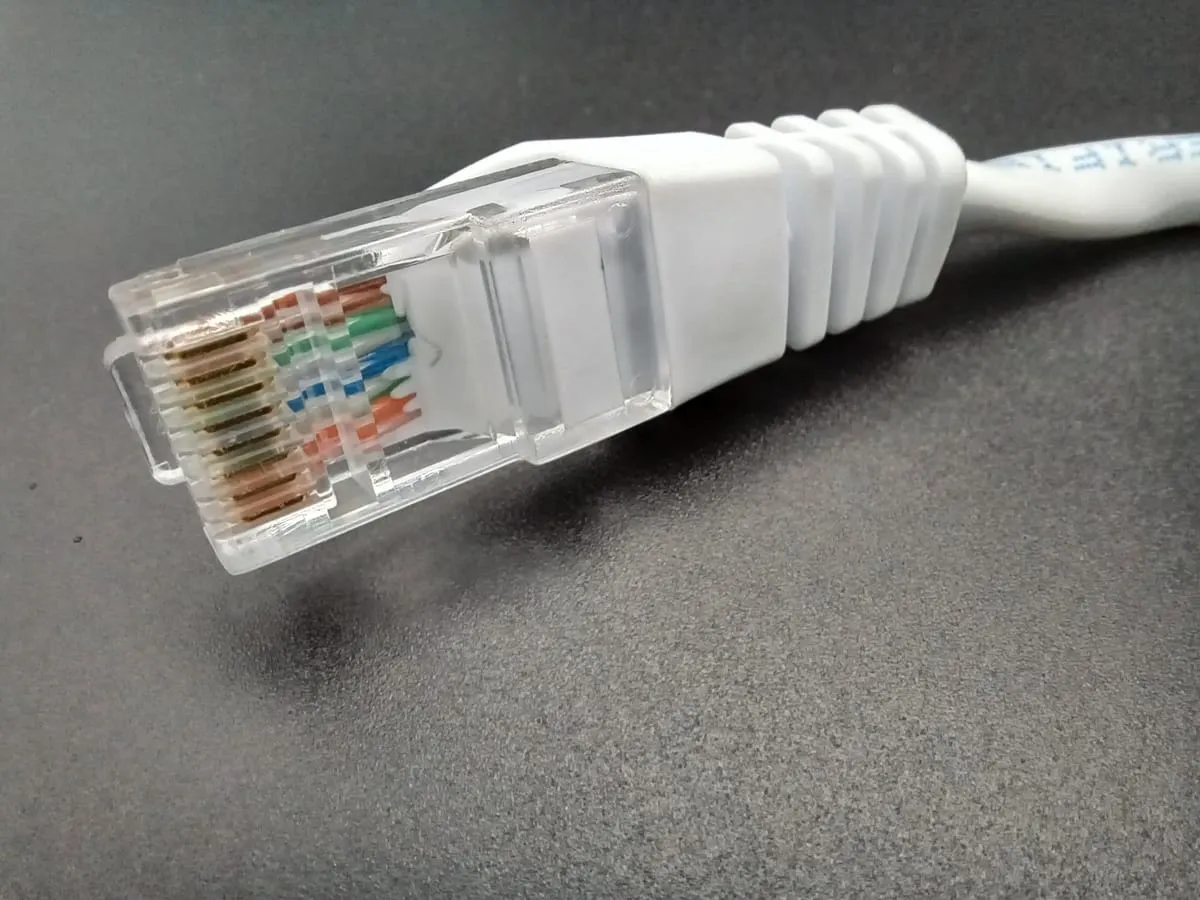
Also sold or searched as Cat5, Cat5e, Cat6 solid ethernet/data cable. Eight thin solid conductors. Recovery is better than folklore says, but stripping 24 AWG by hand is brutally slow — nearly everyone sells data cable unstripped. Stranded patch cords recover roughly half of solid runs.
How much copper is inside
The copper recovery rate is the share of a cable's total weight that is actual copper once the insulation and jacket are stripped away. For Cat5e and Cat6 cable that's about 42%, and typically anywhere from 35% to 58% depending on gauge, age, and condition.
In round numbers: 100 lb of Cat5e and Cat6 cable yields roughly 42 lb of bare copper. At an indicative #1 copper price of $4.70/lb (October 2026) that's about $197 of copper — but prices swing by region and by the week, so run it with the number your own yard pays.
Open the Copper Wire Yield calculator, pick "Cat5/Cat6 — solid bulk runs" (or type your own recovery %), and enter your local prices to see the stripped-vs-as-is breakdown for your exact load.
Copper weight by size
Both carry eight solid copper conductors in four twisted pairs. Cat6 usually uses slightly thicker 23 AWG wire; some brands stay at 24 AWG, so read the jacket print.
| Size | Copper in 100 ft | Copper in 1000 ft box | Cable weight per 1000 ft | Copper share |
|---|---|---|---|---|
| Cat5e (24 AWG) | 1.0 lb | 10 lb | 21–22 lb | 46–48% |
| Cat6 (23 AWG) | 1.3 lb | 13 lb | 22–26 lb | 49–58% |
Copper weights are computed from the nominal AWG cross-section of annealed copper (8.89 g/cm³), plus 3% for the pair twists. Cable weights come from the spec sheets listed under Sources; copper share is copper divided by cable weight, so it’s the most you can recover by stripping.
Strip it or sell it as-is?
Verdict for Cat5e and Cat6 cable: usually sell as-is unless you strip fast. Stripping only pays when the gap between the bare-copper price and the as-is (insulated) price beats the time it takes — and that gap scales with the recovery rate. At 42%, it is a judgement call that depends on your stripping speed. A machine tips it in your favor; a utility knife often does not.
To put a dollar figure on your own time, run it through the Strip or Sell calculator, which adds an hourly rate to the raw copper math.
How it compares to other cable
Every common cable type, with this page's row marked:
| Cable type | Recovery | Typical range |
|---|---|---|
| MCM / feeder cable (250 MCM+) | ~88% | 85–94% |
| THHN — heavy gauge (4 AWG to 4/0) | ~84% | 80–90% |
| THHN — standard (8–16 AWG) | ~80% | 75–88% |
| Double-insulated power wire | ~75% | 70–80% |
| Romex / NM-B (indoor solid) | ~65% | 60–73% |
| Mixed #2 insulated wire | ~60% | 55–69% |
| AC / appliance whip wire | ~55% | 50–60% |
| Extension cords / SJ cord | ~42% | 35–48% |
| Cat5/Cat6 — solid bulk runs ← this page | ~42% | 35–58% |
| Cat5/Cat6 patch cords (stranded) | ~22% | 18–28% |
| MC/BX armored cable (copper inside) | ~30% | 25–35% |
| Christmas lights | ~20% | 15–25% |
Sources
- iScrap App: ~50% for solid Cat5/6
- Spec sheets (West Penn, Panduit, Belden, Vertical Cable): 21–26 lb per 1000 ft vs 10–13 lb of copper, so 46–58% for new bulk cable
- West Penn Wire 4245 Cat5e, 24 AWG (21 lb per 1000 ft)
- Panduit TX5500 Cat5e riser, 24 AWG (22 lb per 1000 ft)
- Belden 2412 Cat6, 23 AWG (22 lb per 1000 ft)
- Vertical Cable 060-series Cat6 data sheet, 23 AWG (26 lb per 1000 ft box)
Recovery figures are cross-checked against at least two published yard references and kept at the conservative end of each range, so surprises land in your favor. Measuring a stripped sample of your own cable always beats a table.
Cat5e and Cat6 cable: quick answers
How much copper is in a 1000 ft box of Cat5e?
About 10 lb. The whole cable weighs about 21–22 lb per 1000 ft, so roughly 46–48% of what you're holding is copper. The table above has every common size.
Which size has the most copper per pound?
Cat6 (23 AWG), at about 53% copper by weight; Cat5e (24 AWG) is the lowest at about 47%. The share depends on how much insulation and jacket each size carries around its copper, so when you're buying or sorting by the pound, the higher-share sizes are worth more per pound of cable.
Is it worth stripping Cat5e and Cat6 cable?
Usually sell as-is unless you strip fast. The math is the bare-copper premium over the insulated price, times the copper you get back (47–53% of the weight here, depending on size), against the hours it takes. The Strip or Sell calculator runs it with your yard's prices and your hourly rate.
How do yards grade Cat5e and Cat6 cable?
Low-grade / communications wire as-is. Yards buy insulated wire as-is at a discounted "ICW" rate that already assumes an average recovery; stripping clean copper moves it up to a higher-paying bare-copper grade.
Is my Cat5e copper or CCA?
Cheap boxes are often copper-clad aluminum (CCA): an aluminum core with a thin copper skin, about a third the weight of solid copper. Check the jacket print for "CCA", or scrape a conductor with a knife: solid copper stays copper-colored all the way through. CCA isn’t paid as copper, and every figure on this page assumes solid copper.
Price your own wire
Enter your yard's prices and see stripped vs as-is for this exact cable.